


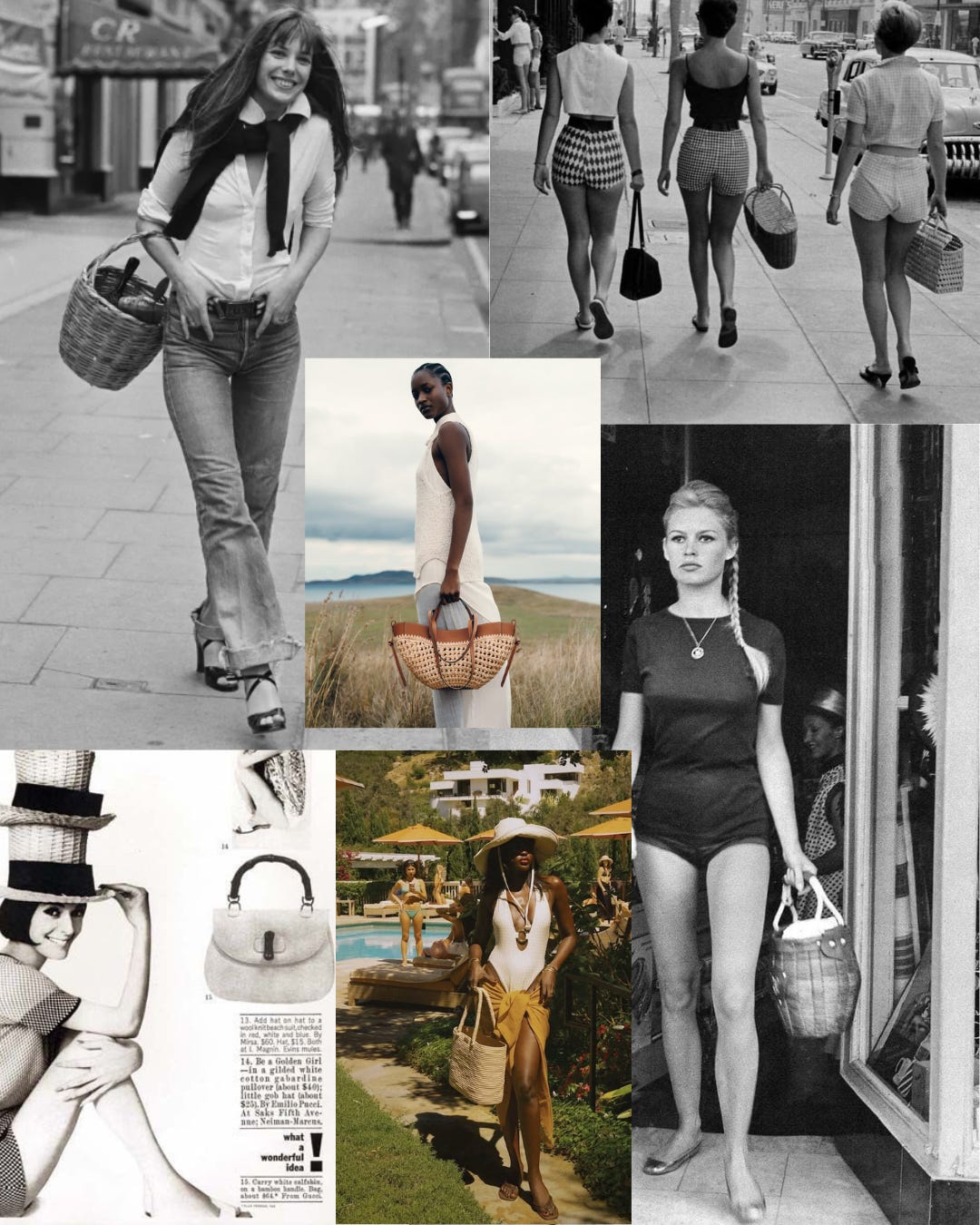
Over the last few years, basket bags have become almost impossible to avoid during the summer. But if you’re a bit of a historian, you may recall iconic moments like Jane Birkin carrying a wicker picnic basket in the ‘60s or Gucci’s first Bamboo bag that was launched in 1947, when there was a leather shortage and designers were looking for alternatives. Now every season, designers from Prada to Loewe put out their latest version every year with price points soaring above $4000.
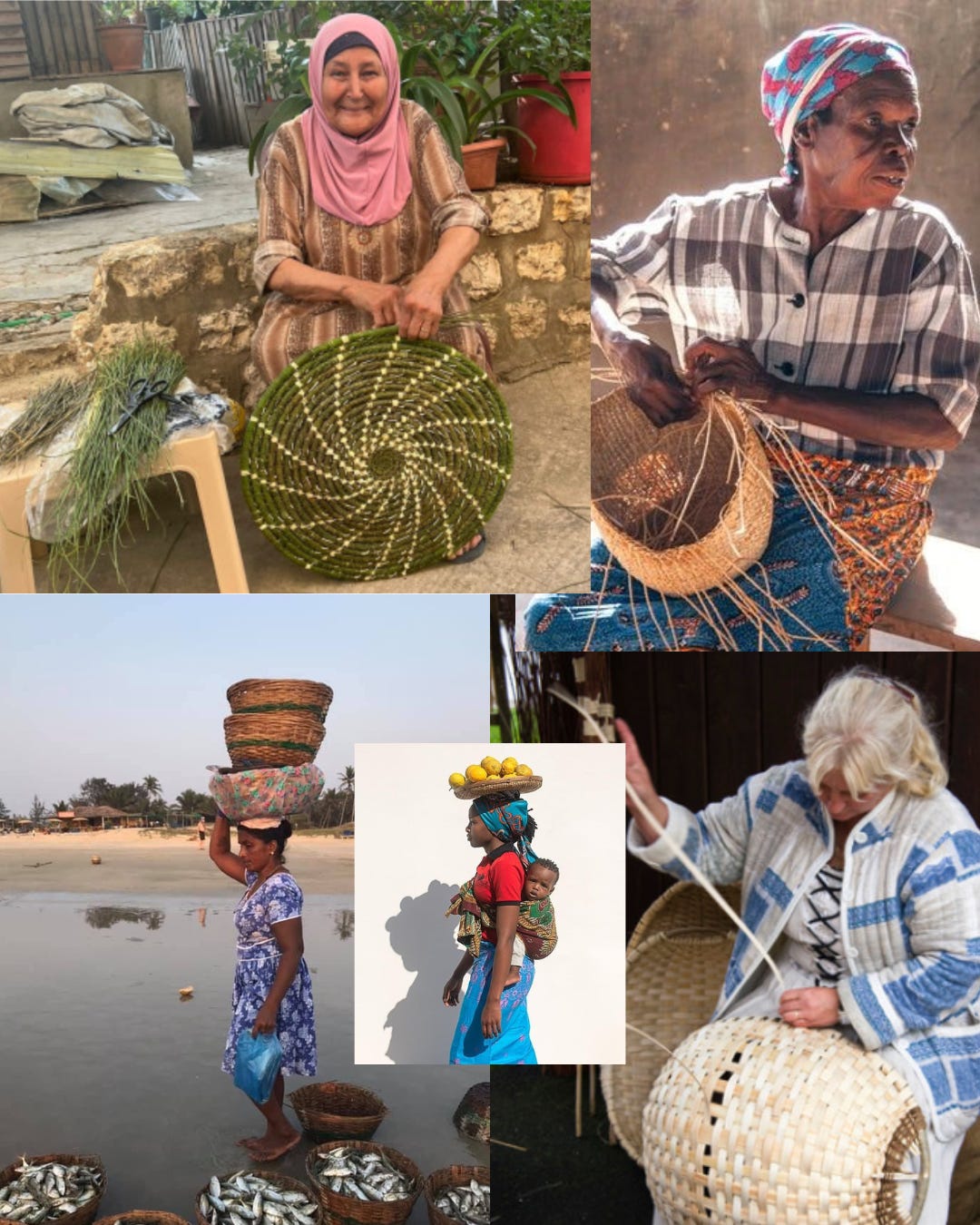
But before handbags became fashion pieces and commodities, woven baskets were tools - used for carrying, storing, harvesting, and transporting goods across cultures and civilizations around the world. You can still see this today in Tanzania (I’m using Tanzania as an example since that’s where our bags are woven, but this skill is widely used in many cultures all around the world) when you go to markets in the city and see women carrying their goods to buy or sell, or out to the villages when you see women carrying crops. Notice, I said women in both instances. I’m not sure if this has always been the case, but not only is weaving a skill that women have passed down in Tanzania, but women are also the ones usually utilizing the baskets. I love, love, love that the women we work with have built businesses around their artistry and craft, and that we, an ocean away, have the opportunity to support and celebrate it.
And while I obviously love a woven tote, I sometimes find myself wondering how many of the bags we see today are actually woven by hand at all. I have to admit I get a little disheartened and cynical by how many are now mass produced, machine-made versions designed to look handmade (like this one that is made from 100% polypropylene, aka plastic), and endless iterations priced so low it raises difficult questions about how the people actually making them are being compensated.
As someone who has worked directly with artisans using materials like sisal, milulu, and raffia, I can tell you with complete certainty: handwoven pieces take an extraordinary amount of time and skill to create. Our Soleil Tote takes 7-9 days to make just one from grass to completed basket (not even counting adding the leather straps). When you see a large woven tote priced under $100, something usually isn’t adding up. Either the company is making almost no profit, the artisan is not being paid fairly for their labor and craftsmanship, or the materials are plastic and the bag is made by a machine (probably still up for debate if the humans involved are being paid fairly). And none of those models are sustainable long term in any sense of the word.

I think what makes the Soleil Tote and our Basket Tote special comes from the human touch. The slight variations, the texture, the hours of weaving, the knowledge passed down over generations - that’s the entire point. A machine can replicate the look of a woven bag, but it cannot replicate the meaning behind it nor the energy that is transferred.
And honestly, I think we feel that difference whether we consciously realize it or not.
There’s something deeply grounding about natural materials and handmade objects. Natural textures and fibers can help create feelings of calm, warmth, and connection, which makes sense when you think about how disconnected most of modern life has become from the physical act of making things. Natural materials age differently. They soften. They patina. They hold memory. They remind us that objects can come from human hands rather than assembly lines.
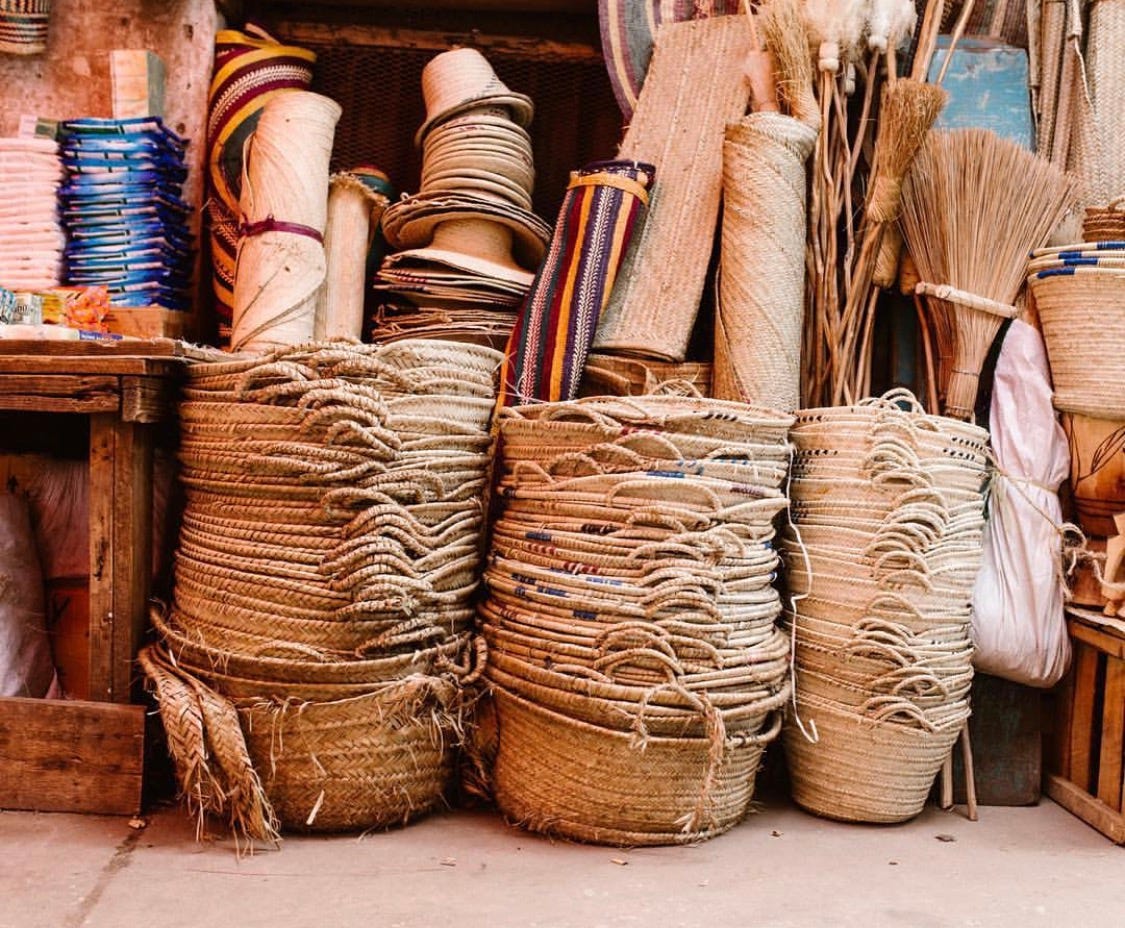
Maybe that's why I've always been drawn to woven bags. They feel honest. They don't need logos or hardware or trends to justify their existence. Their beauty comes directly from the material and the maker.
There has always been a tension for me in my business. We are and always have been a for profit business because without profit, there is no business. But the goal has never been to simply sell as many bags as possible. Because to me, carrying a handmade bag has never felt purely transactional. It feels personal. Someone spent hours - sometimes days - creating something functional and beautiful with their own hands. There’s care embedded in that process. Craftsmanship carries a kind of quiet humanity with it, and I think that’s part of why artisan-made pieces continue to resonate so deeply even in an increasingly mass-produced world.
In many ways, the two woven bags we're currently offering at ABBY ALLEY are a celebration of that tradition - taking a craft that has existed for generations and creating a way for it to be appreciated and valued in a completely different part of the world.

Both of these totes are just stunning. Each time I look at them I’m in awe that they started as grass in the ground.
The AA x NB Basket Tote was designed to be the kind of forever summer carryall - the bag you throw in the car for the farmer’s market, bring on vacation year after year, or keep by the door all season long. And the Soleil Tote feels a little more refined and sculptural while still carrying that same warmth and texture that only natural fibers can provide. And bonus - they both fit underneath the seat in front of you on a plane. :)
What I love most about both is that they aren’t trend-driven. They feel lasting. Useful. The kind of pieces that become part of your life rather than something you wear for one season and forget about the next.
The older I get, the more I find myself drawn to that philosophy in general: fewer things, but better ones. Pieces with texture, craftsmanship, longevity, and a story behind them. Things that feel connected to real people and real places.
There’s something special about knowing the item you’re carrying exists because someone sat down and made it by hand. In a world that increasingly prioritizes speed and scale, that kind of care feels worth preserving.
xo,
Abby